
An Artist’s Guide to International Networking
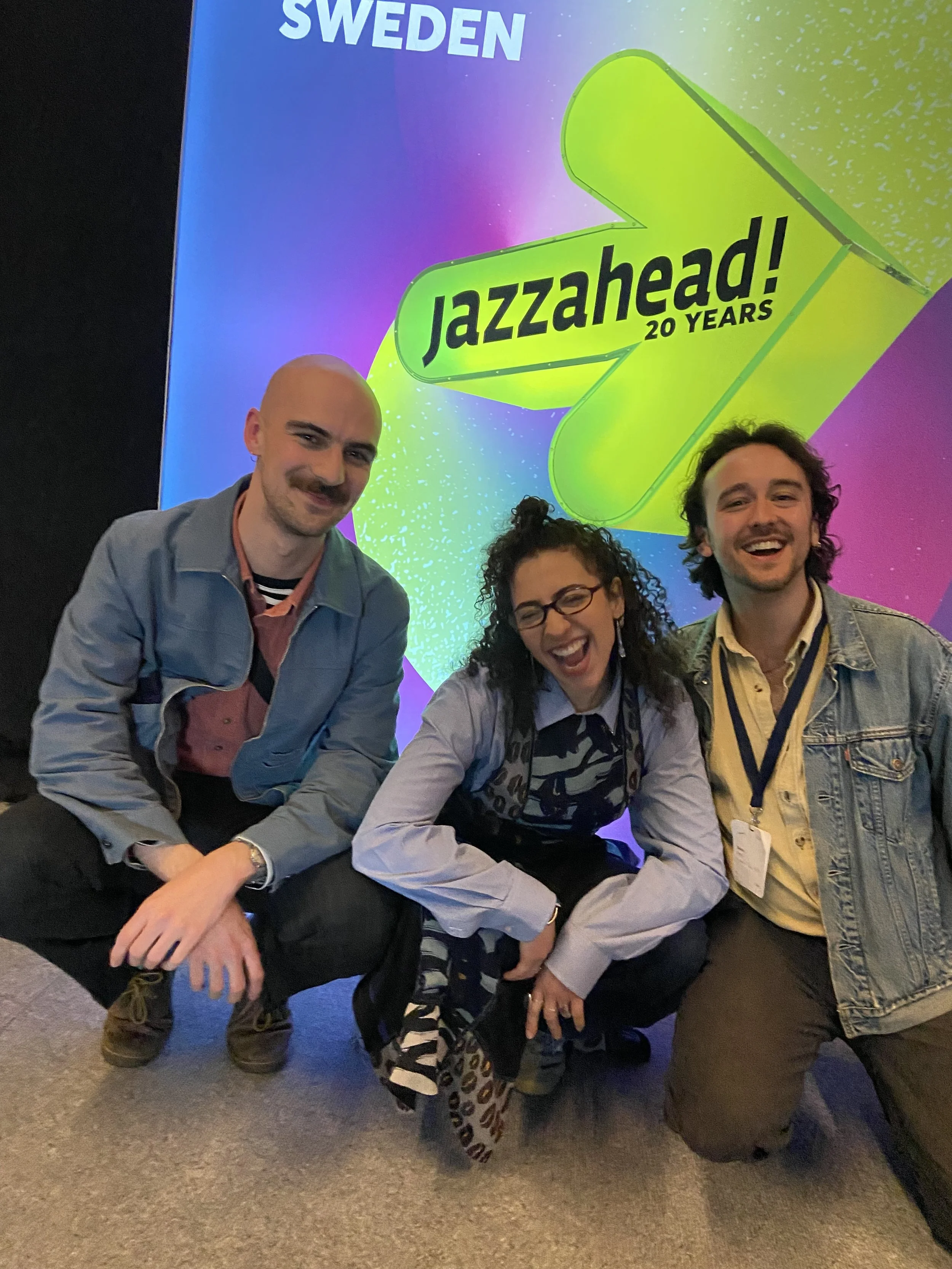
Bex from Rivkala
Written by Bex Tuck aka Rivkala
Before travelling to Bremen, I had next to no idea what an international jazz conference would actually be like. To be honest, I barely knew what jazzahead! was. I pictured a few days of serious business (and serious busyness), gave myself a good old fashioned pep talk and prepared for some intense networking.
What I didn’t expect was how enjoyable it would be — the incredible music I’d hear, the warmth of the people I’d meet, and the genuine friendships that would come from it.
This blog is for anyone curious about attending an international jazz conference and wondering whether networking events like this are worth it. I’ll share how I prepared, what the experience was actually like, and the biggest things I learned from attending.
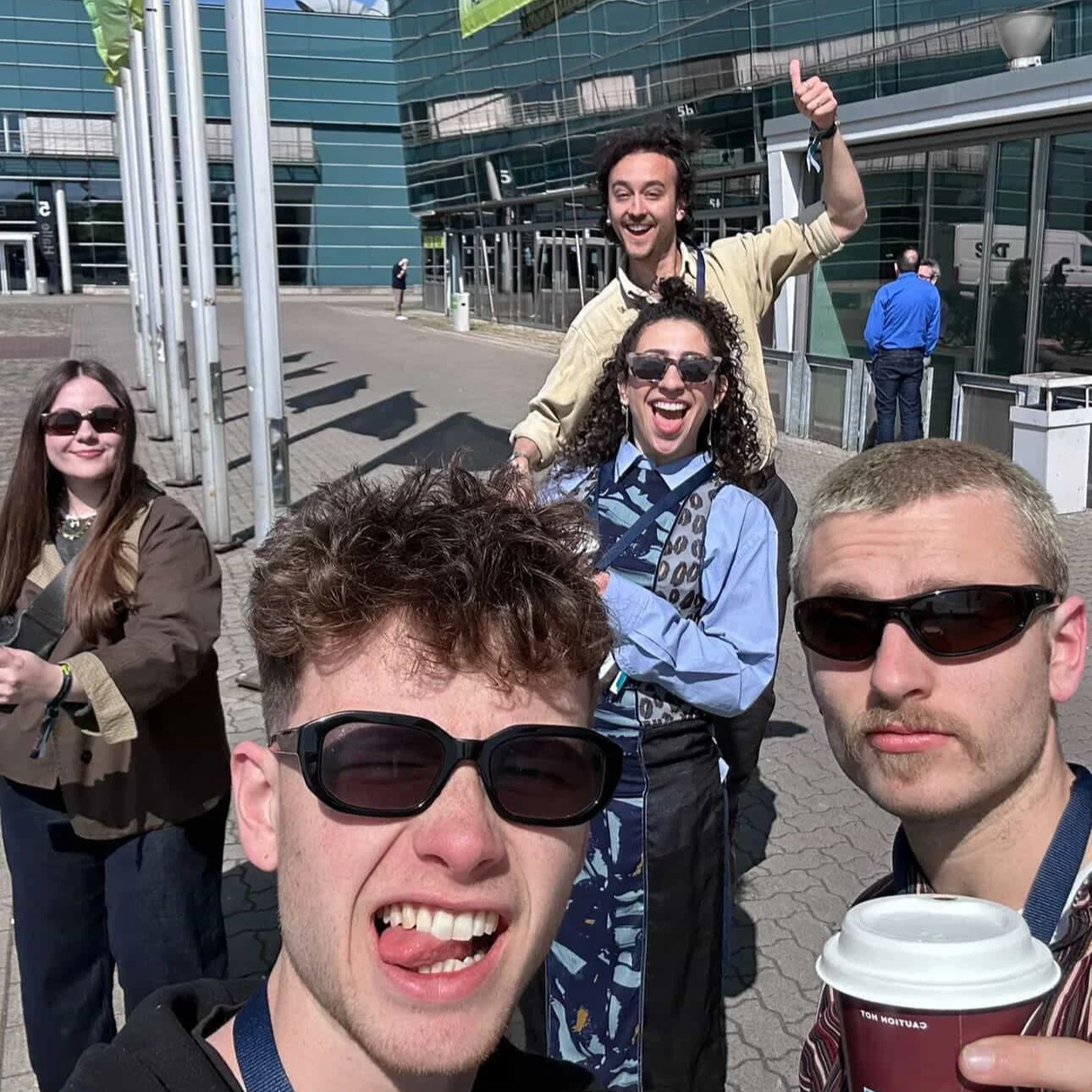
Rivkala at jazzahead!
What is jazzahead?
jazzahead! is the world’s largest jazz industry gathering: a trade fair, conference, and showcase festival held every April in Bremen, Germany. It brings together artists, promoters, agents, festival programmers, labels, and bookers from across the world. For musicians hoping to develop international touring opportunities, it’s one of the most important places to be.
How did I end up there?
A few weeks before the conference, I received an email from Sally Currie, head of Drake Music, encouraging me to apply for a bursary through the Jazz Promotion Network (JPN). Thankfully I did, and I ended up travelling as part of a small delegation representing England.
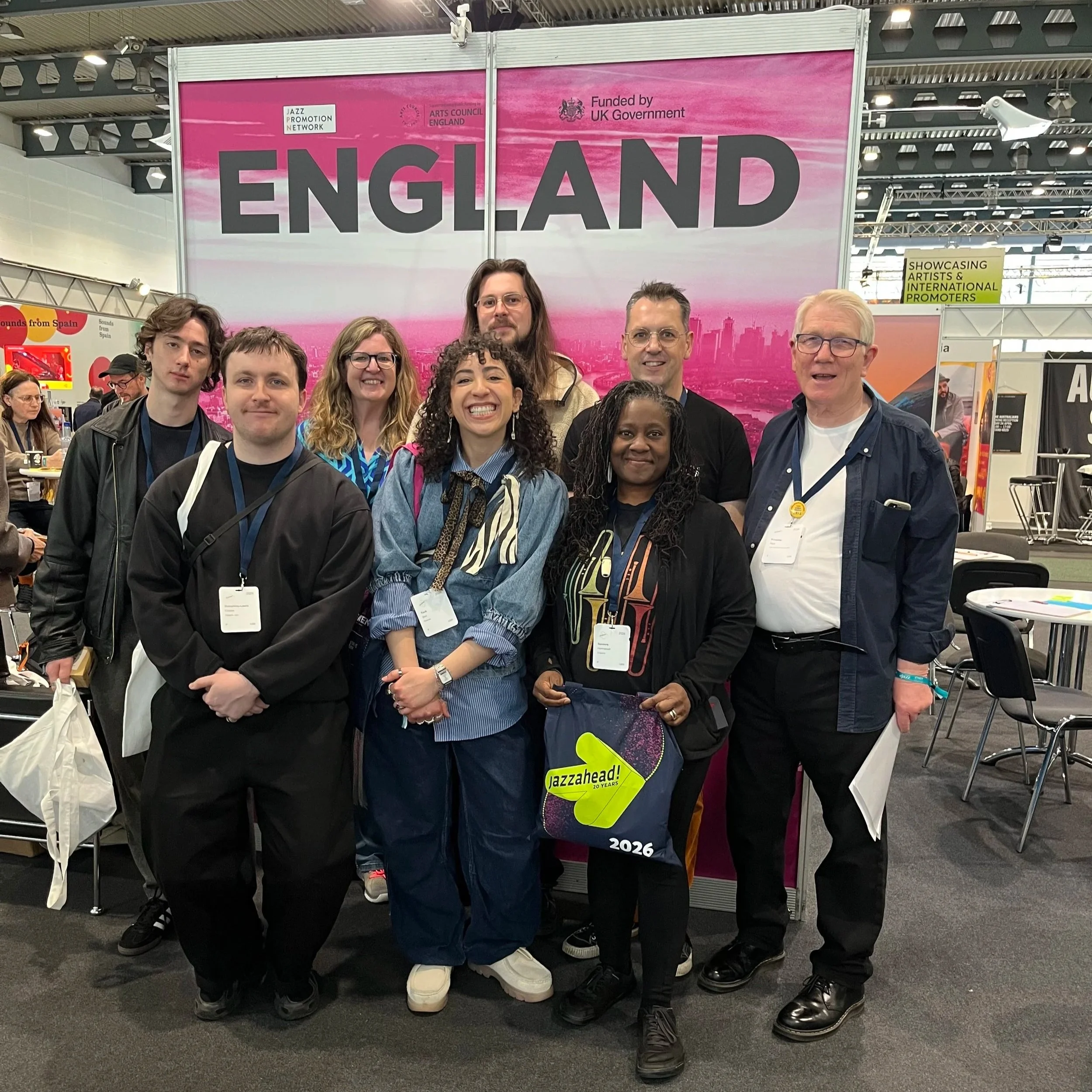
England delegation at jazzahead!
Before the conference
Business prep
JPN organised a helpful briefing call for delegates before the trip. They explained how the conference worked and what to expect. This year they coordinated the new UK & Ireland village, which brought together stands from England, Scotland, Wales, and Ireland in one shared area.
Each country attending jazzahead! has a stand in the main conference hall, often alongside labels, press organisations, and independent music companies. Many of the stands host informal drinks or networking sessions in the afternoons, creating easy opportunities to meet people.
Personal prep
I also spoke to Heather from Jazz North, who had attended previous years. She gave a realistic picture of the pace of the event and stressed the importance of taking breaks. That advice turned out to be invaluable.
Accessibility
Speaking with Sally from Drake Music beforehand was also incredibly useful. She’d attended before and shared insights about accessibility, an area where there is definitely still room for improvement at jazzahead!.
The conference environment can be very overstimulating: crowded halls, fluorescent lighting, constant background noise, and packed schedules. This can be difficult for people who are hard of hearing, neurodivergent, or have sensory processing challenges.
That said, the venue itself wasn’t as difficult to navigate as I expected. Maps were available, and people were generally helpful when directions were needed. The conference hall was wheelchair accessible, including toilets, although I can’t speak for every external showcase venue across the city.
One challenge was the large cobbled area outside the main venue, though smoother routes were possible around the edges. There were also several food vendors and cafés on site, and the venue was conveniently close to Bremen train station.
The conference featured panels on a huge range of industry topics, though I noticed there were no talks specifically focused on disability access within touring or the music industry. There was, however, an interesting discussion about balancing caring responsibilities with careers in music, particularly how this disproportionately affects women.
There were no designated quiet spaces for decompression or regulation, though there were a few unofficial quieter spots. From conversations I had before and during the conference, there do seem to be people pushing for better accessibility awareness, so hopefully future editions will improve further.
Whilst I was there
One thing I quickly realised was that my fears about “not fitting in” were completely unfounded. The range of jazz-rooted music represented was enormous, and almost everyone I met was warm, welcoming, and enthusiastic.
What a typical day looked like
Most mornings started at the conference hall, checking in with the UK & Ireland village before heading off to explore.
A huge part of the experience involved simply approaching stalls and starting conversations. I came home with stacks of business cards and flyers from people all over the world, and some of those conversations have already developed into future plans and collaborations.
There were daytime panels covering everything from artist development to touring and label management. I attended talks from the band KNOWER about their creative process, a session featuring Swiss label UNIT Records, and a discussion about grassroots gig booking.
I also attended one of the speed networking sessions. While it was enjoyable and I met some lovely people, the most meaningful connections often came more naturally through casual conversations elsewhere.
The daytime showcases were another highlight. Each year, jazzahead! spotlights a partner country, who gets a big focus in the showcases. This year it was Sweden, while next year will focus on the Baltic states: Estonia, Latvia, and Lithuania. There was live music available somewhere throughout every day, and it provided a really welcome balance to the constant networking. It was a great way to take a break and reminded myself why everyone was there in the first place.
At around 4pm many country stands hosted drinks receptions to encourage networking. It’s worth noting that the environment can feel quite boozy, so it’s important to pace yourself and be mindful if those contexts are difficult for you. In a very British move, the England stand decided to serve tea instead, complete with kitschy matching aprons (which I obviously loved).
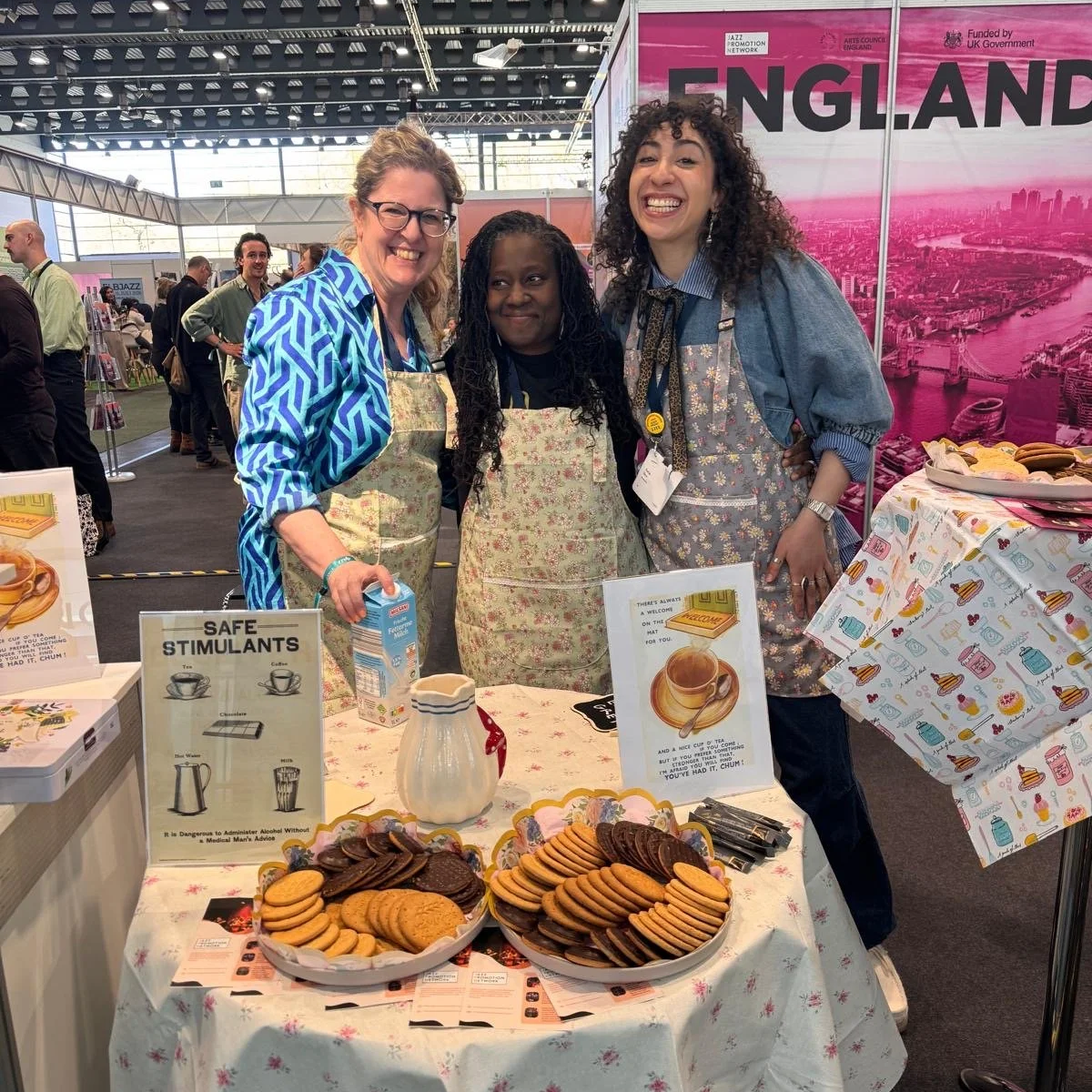
Biscuit time with Rivkala and friends
Evenings usually involved taking a short break from the conference before returning for showcases. I was kindly adopted by the Welsh delegates for a couple of dinners in the city, which was not only delightful company, but also gave me a chance to explore Bremen a little.
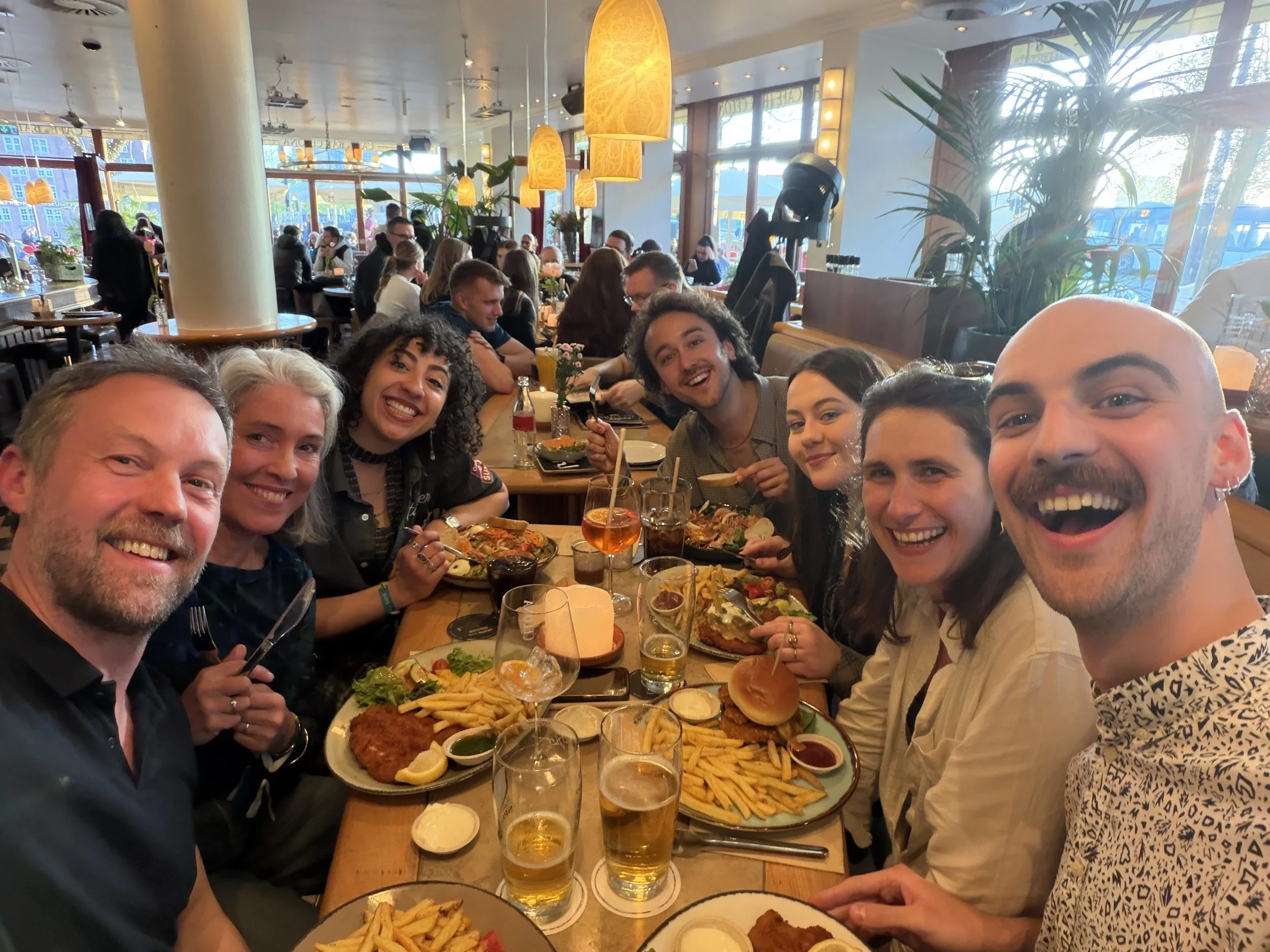
Rivkala and jazzahead! friends at dinner
At night, showcases took place across several venues around the city. The UK showcases were amazing with Alex Hitchcock Quartet, Jasmine Myra, Azamiah, and Emma Rawicz, plus some of my other highlights such as Sahad, Nine Sparks Riot, Tonina and Bitoi.
After the official events finished, many people gathered in the hotel bar next to the venue. It became a lively social hub and often led to some of the most relaxed conversations of the whole event — though with the caveat that you still had to function the next morning.
My advice and takeaways
Before you go
Research bursaries and funding opportunities early. Conferences like this can be expensive, and support schemes do exist.
Reach out to people in your existing network before attending. Ask if they know anyone going, whether they have advice, or if there are specific people they think you should meet.
Book travel and accommodation as early as possible. Thousands of people attend from across the world, and things get expensive fast.
Triple-check your travel dates. I accidentally booked mine wrong because I thought the conference ran Friday–Sunday rather than Wednesday–Saturday, which resulted in some stressful rebooking (a classic ADHD move from me).
Business cards are essential. Almost everyone exchanges details this way, so it’s worth having them ready. It also helps to prepare your phone contact card for quick AirDrop exchanges.
Have your professional materials prepared beforehand — website, EPK, social links, music, and anything else you may want to share.
I’d also recommend preparing a simple follow-up email template before travelling. After several days of networking, it makes reconnecting much easier.
The conference uses an app called talque, which is worth exploring in advance. You can create a profile, browse attendees, message people, and plan your schedule. Looking through the participant list ahead of time can help identify useful connections before arriving.
Finally, think about your goals. Are you hoping to connect with festivals, venues, labels, press, or artists from specific countries? Having a sense of direction helps make the experience less overwhelming.
Whilst you’re there
Be friendly and be yourself. The most valuable part of networking is often the personal connection rather than trying to immediately discuss business.
Remember that everyone is there for the same reason: to meet people, discover music, and build connections. Most people are just as overwhelmed as you are.
Have one clear system for recording contacts. I accidentally spread mine across spreadsheets, notebooks, and phone notes, which created extra admin afterwards. One person I met had a brilliant system where they stapled business cards directly into a notebook alongside handwritten conversation notes.
If you see someone you want to speak to, don’t leave it too long. Some stalls are only temporary for certain days, so grab opportunities when you can!
Most importantly, pace yourself. Conferences like this are marathons, not sprints. You don’t need to attend everything to have a valuable experience. Short, focused bursts of networking combined with regular breaks are often far more effective.
And remember to actually enjoy it. The music is incredible, and there’s something really special about spending several days surrounded by people who care deeply about the same art form you do.
If you get the chance, make time to explore Bremen itself. The old town is beautiful and provides a welcome break from the intensity of the conference.
Afterwards
Follow up with the people you connected with, but don’t panic about doing it immediately. Everyone returns home to overflowing inboxes, so there’s no need to rush.
Also remember that not every connection will lead to something instantly — and that’s okay. Some conversations may not become relevant until years later. Networking isn’t just about immediate opportunities; it’s about slowly building long-term relationships.
I hope this has helped make the idea of attending jazzahead! feel a little less intimidating. It can absolutely feel overwhelming at times, but it’s also inspiring, exciting, and genuinely fun.
And in the spirit of connecting with new people: if you’d like to chat more about the experience, feel free to reach out to me on Instagram at @rivkalalala or via email at rivkala.music@gmail.com
Apply now to perform at jazzahead!2027
Artists can now apply to perform at jazzahead! 2027 via SHOWCASES - these are 30 to 45 minute short concerts at jazzahead! which are open to the general public and at the same time part of the trade fair. The 38 showcase bands have previously applied and are selected by international expert juries. The jazz highlights and current formations from Germany, Europe, Overseas/Asia Pacific as well as from the Baltic states as partner region 2027 can be experienced on three days and nights on the stages of Hall 7 and the Kulturzentrum Schlachthof.