
Frank Griffith and The Jazz Cavern radio show
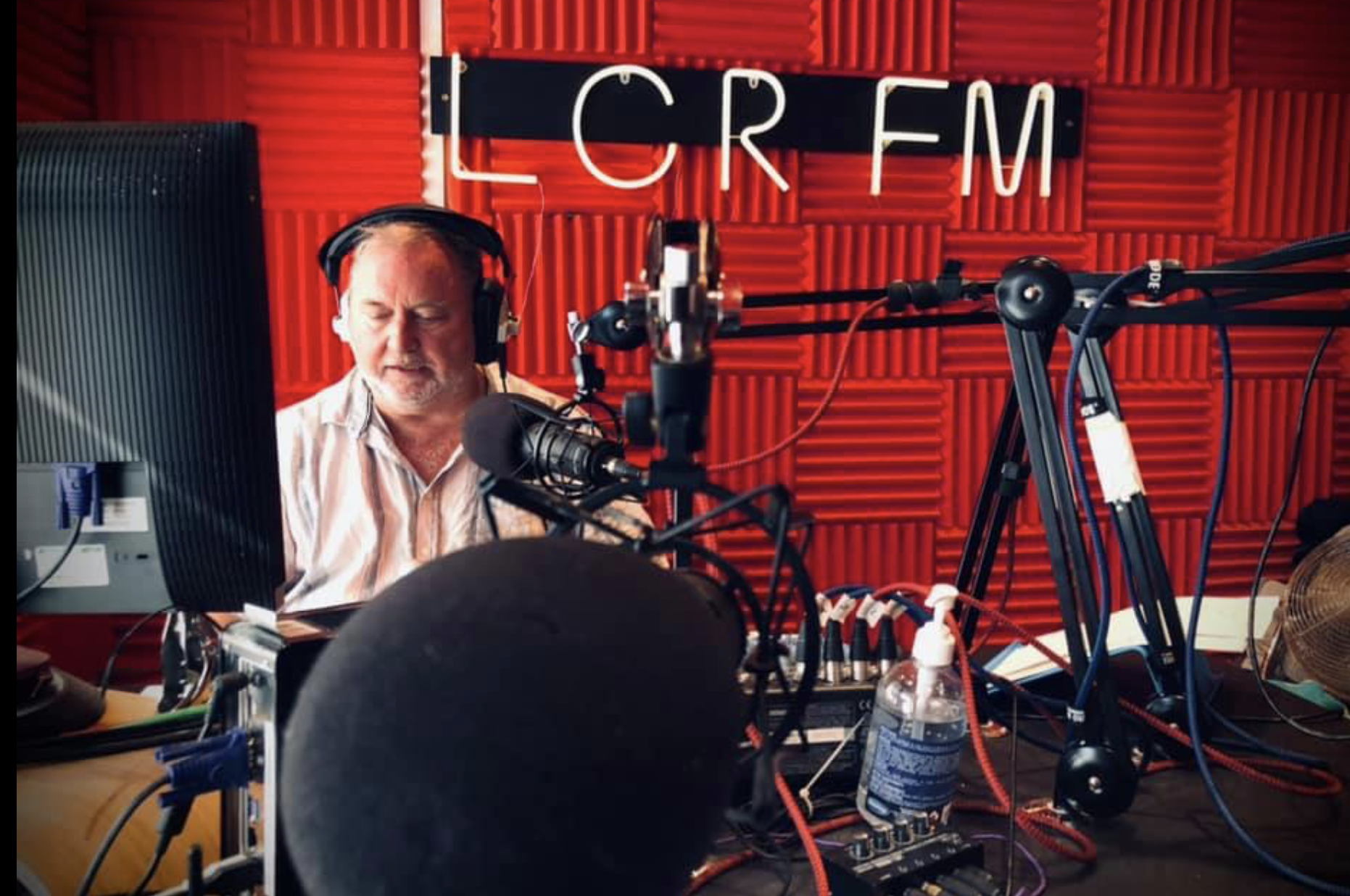
Frank at LCR FM © Phil Shotton
Respected saxophonist, composer/arranger and educator Frank Griffith moved to London in 1996 from New York City where he had worked with the likes of Ron Carter, Jon Hendricks and John Pizzarelli. After teaching for many years at Brunel University, Frank relocated to Liverpool where he now regularly performs with his own groups including a quartet, nonet and big band.
After being a guest on Frank’s ‘The Jazz Cavern’ show on Liverpool Community Radio (LCR FM) Jazz North team member Helena Summerfield was keen to learn how Frank had made his transition into radio presenting and discuss the enduring appeal of radio - its accessibility, intimacy and role in connecting both local and global communities.
You can listen again to previous editions of The Jazz Cavern on Spreaker
Frank Griffith in conversation with Helena Summerfield
HS - So Frank, I can tell from your accent that you're not originally from Liverpool. I wonder if you could tell me a little bit about your musical career and how you came to live in the north of England?
FG - I moved to England in ‘96 from New York City. I'm not from New York, I grew up in Eugene, Oregon, on the West Coast, and I moved to New York when I was 21 and lived there for about 15 years. My wife's English and by that point we had a young son, so after living in New York for a few years we moved to London, which was quite a nice move from New York. You know, being both quite similar cities and such a great environment for the music. And I was lucky enough to get a teaching post at Brunel around the time I moved to London so I held on to that for as long as I could.
HS - You'd been very active on the music scene in New York, was it difficult moving to London and having to make new connections?
FG - Well, it was difficult, just because when you start over in a new place, you don't know people. It was relatively early in the internet world so you actually had to speak to people and ring them on the telephone. Can you imagine that - being out there meeting people in person and not doing everything virtually, so it was a good way to start making new contacts. And in addition to playing I've had a fairly reasonable career as an arranger / composer. I've done a lot of arranging and composing, and that was good thing for moving to a new place, because it enables you to get involved in bands as a writer and not just as a player, because there's less writers than players, even though there's so many great writers, arrangers and composers in the jazz world.
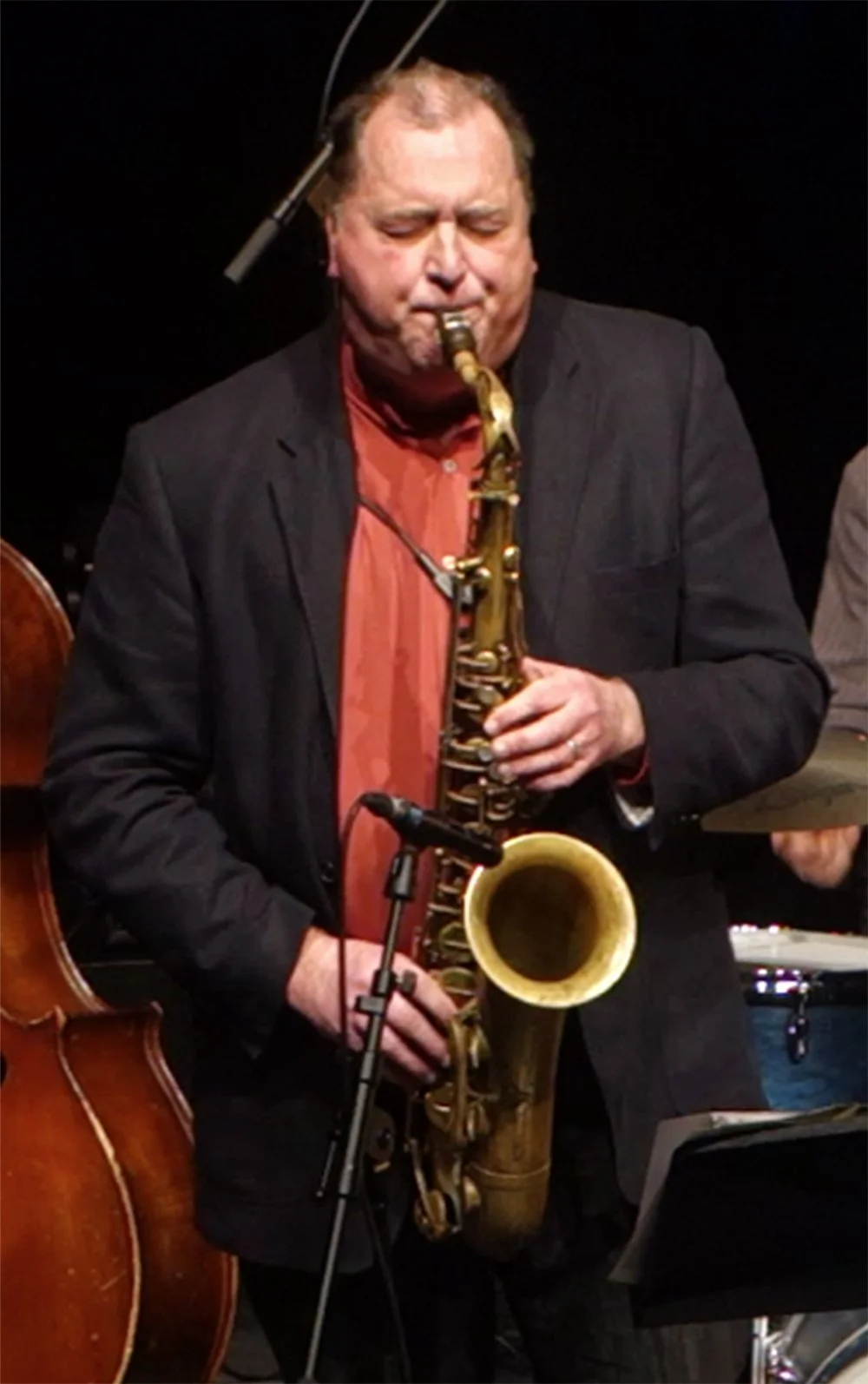
Frank Griffith © Peter Butler
The scene in New York during the 80s and 90s, when I was there, was so, so competitive, you know, because you're trying to play at the same venues that legends of jazz are playing at. So it was quite daunting. And so I did a lot of playing. I played a lot of, like most jazzers, functions, you know, weddings - the stuff that we do to tide things over. And then I was a lucky recipient of the equivalent of an ACE lottery grant in 1990 to make a recording, and I made an album, but I didn't put it out. I didn't release it for several years because of difficulty getting it accredited, you know, with some kind of label - very few people were making their own labels, as is the case today. So, I managed to get the recording out eventually, and then I moved here. And as it turned out, it was easier for me to get gigs.
HS - And you had your teaching role at Brunel?
FG - Yes, Brunel University, which was not particularly known for its music course, was in a transition, having been a science and maths engineering type bastion of university since the 60s. In the mid 90s, they decided to add an arts department which was drama, music, visual art, film and I think possibly dance. And I was lucky enough just to be hired to do what they called a B Tech. It was essentially an FE qualification, like the equivalent of an A level, and I ran that for a couple of years, and also a degree program. I started teaching as they were looking for people who weren't just solely classical expertise and I got that bit between my teeth. Brunel was just on the outskirts of London in a lovely little village called Uxbridge. So, yeah, that was good, I sort of equally got involved in playing and teaching at the same time.
HS - You've mentioned your playing and teaching and also arranging and composing. I'm curious about your route into radio presenting?
FG - Well, it wasn't an easy one, because I tried getting involved in presenting on radio in the London days. Brunel University, like a lot of unis, have a student radio station as part of their offering, you know, to the world. And I remember a couple of my students had little radio shows at Brunell, and they invited me on to play some of my tracks and yabber away! I then did a few shows on different small radio shows, radio stations that don't exist anymore, but when I came to Liverpool in ‘17 I found out about Liverpool Community Radio, which is a studio room with a little cafe in Kensington, and I got to know the people that run the station. There's a couple of people there, Matty and Steve, and I just essentially guested on another show. This was about five years ago, it was actually during covid, and I essentially said I'd like to do a show here, and that enabled me to do my monthly show called The Jazz Cavern, named after the Cavern Club in Liverpool.
HS - Why do you think that radio is such an enduring medium?
FG - I grew up, believe it or not, in the 60s and 70s in the West Coast, in Oregon, and my parents, because of their views, weren't having television. And that was rare. I mean, everyone had a telly in the 60s and 70s.
HS - I grew up without a TV as well Frank!
FG - Oh, well, there were the two of us - we're the two!
Well, my dad was of the earlier generation when people just didn't have tellies, you know. We had, you know, friends, we did get to watch some TV. But, I just learned early on that radio is the best companion for entertainment. It's not just music, but the fact that you can listen to it while doing something else, it doesn't dominate you the way telly does because of the visuals. And I think that if you're the sort of person that has oodles of time to sit and watch TV or listen to radio, good on you, but most of us don't have that access, and when you're driving the radio is the only option. I think somebody said ‘the theatre of the mind is exploited richly when you're listening’* because you don't know, in some cases, what the person looks like that's talking to you. So you form us. You form a mental, a visual image of what they look like without even seeing them, which is quite interesting.
* quote Steve Allen “Radio is the theatre of the mind: television is the theatre of the mindless”
I think that Desert Island discs, Private Passions, any of those sort of interview shows where they use a theme, a musical theme, to underscore what they're trying to find out about the person. I think those are brilliant, and it's not the same when you're looking at them talking, because you might get distracted, or the set might be really awful. With radio your appreciation of what you're taking in is entirely aural and that makes a big difference on how you just drink it in. And the other remarkable thing is, who would have thought that we could listen to radio shows from all over the world, on the internet, you know, or on your Alexa speaker, or whatever technology? For me, radio has benefited more because of technology than even television because of the fact that it's a limited medium, and therefore can be shared in more ways, if that makes sense?
HS - It absolutely makes sense. I love radio. My mum listens to the radio all the time, so it's something that I grew up with, and I think not having a TV obviously gives you that more time to be creative, learn an instrument, read a book or do other things. You know, I see it with my kids. It's a completely different world that they're growing up in, with the amount of things they have to distract them, like phones and computer games, that didn't exist when I was growing up.
FG - Well, the thing about phones and computer games and anything involving a screen,
is that they become an addiction, the same way, I don't know a bad habit like smoking or whatever is, because it's just having that physical contact with this thing in your hand. When I was teaching at Brunel, because most of the students, you know, were grown ups, you couldn't really confiscate their phones like in schools. When a student is sitting in the class or a rehearsal with their phone in their hand, going a mile a minute, or a laptop, some kind of computer, they're not listening, taking note of what you're saying. And every time you mention a word or a situation that you're trying to get across in a lecture, they'll be prompted to, you know, look it up on their phone or something, you know.
HS - Moving back to The Jazz Cavern, how can jazz artists send their music to you for consideration on your show?
FG - I would say the best thing, if you can manage, I'm going to get a bit carried away now and say a good old fashioned slice of plastic. Send a CD, which is a big thing because a lot of people don't make CDs, so I'm not expecting it, or the second best option is a single mp3 of a track. I know it's just old people like me, but this thing about a physical CD, you know, you brought me three or four CDs along last week, didn't you? We played some tracks, and it just made it so easy and pleasant to just click, click, click, done.
The thing about being a host of a show presenter is that you end up having more music than you can play because of the fact that you've only got maybe an hour show, and you don't have an opportunity to make a new show every week or whatever. So the less hassle to transform that track onto radio, the better, the more chance, the higher the chance you're going to get it played.
HS - I am sure that you will be inundated with CDs and mp3s after this interview is published Frank. Thank you so much for taking the time to talk to me today.
Frank can be contacted by email frank@frankgriffith.co.uk
Liverpool Community Radio is located at 53-57 Holt Road, Kensington, Liverpool L7 2PN and the team can be contacted here
You can listen to LCR FM via the website or the TuneIn app (free internet radio)
LCR FM is more than just a radio station — it’s a community. Based in the heart of Liverpool, it’s an independent, volunteer-led organisation powered entirely by local people who believe in the power of creativity, opportunity, and connection. LCR FM continues to be a springboard for local talent — and a place where lives are changed every day.
Do you host a northern-based radio show?
If you host a northern based jazz radio show we want to hear from you - contact helena@jazznorth.org if you are interested in being interviewed about your show for a future Jazz North blog post.
Double-click to edit...